Superheat vs Subcool: The Fastest Way to Check Charge
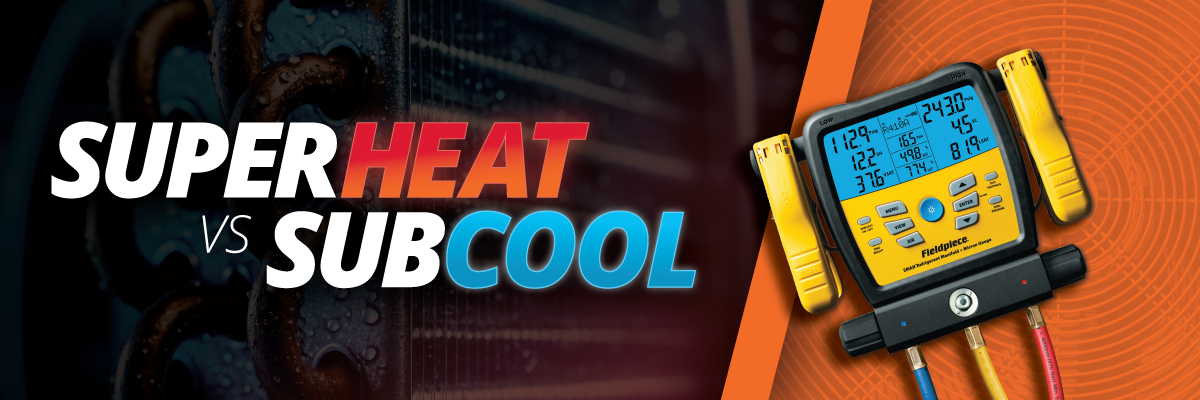
These Readings May Reveal Vital Secrets About Your HVAC System



If you want to maintain efficiency and ensure optimal performance in your HVAC system, there are two numbers you need to know: superheat vs subcool. These two readings give a fast, data-driven check on refrigerant charge, airflow, and metering device performance—often revealing issues before they become emergency calls.
Checking the superheat and subcooling tells maintenance technicians how healthy their HVAC system is. This check can also reveal problems with the system before they become emergency calls. Confirming the proper refrigerant charge, spotting airflow problems, and preventing compressor damage all start with knowing these two key readings.
Key Takeaway: Check subcooling first (liquid side), then verify superheat (vapor side). Together, they confirm charge and airflow, reducing callbacks and preventing compressor damage.
What is Superheat?
Superheat is the temperature of refrigerant vapor above its boiling point. That “bonus” heat keeps the refrigerant in vapor form as it leaves the evaporator coil. This is an important preventive maintenance check, because liquid refrigerant hitting the compressor can damage the equipment fast. Satisfactory superheat:
- Ensures refrigerant is fully vaporized
- Helps the system cool and dehumidify properly
- Protects the compressor

Adjusting refrigerant charge to reach the manufacturer’s target superheat helps to protect the system and ensure the evaporator is operating efficiently.
What is Subcooling?
Subcooling is how much the refrigerant’s temperature is below its condensing temperature, making sure it condenses enough refrigerant into liquid to satisfy the flow rate of the metering device. This allows HVAC systems to cool the space efficiently. Proper subcooling:
- Improves system efficiency
- Ensures the amount of refrigerant in liquid state is sufficient to absorb heat
- Prevents refrigerant vapor from traveling through the metering device
Think of superheat and subcooling as “thermometers” that measure whether the refrigerant charge is correct. Together, they create a balance that allows the refrigerant to flow through the system properly. Checking both gives a clear picture of system performance. When both measurements are within proper perimeters, the system is better able to deliver effective cooling without wasting energy. Plus, residents will feel more comfortable in their homes.
Measure subcool first, to determine how much liquid is entering the metering device. And then look for satisfactory superheat.
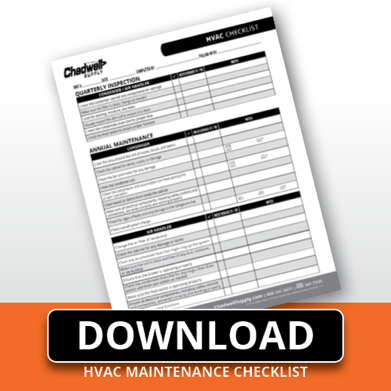
Tools you need
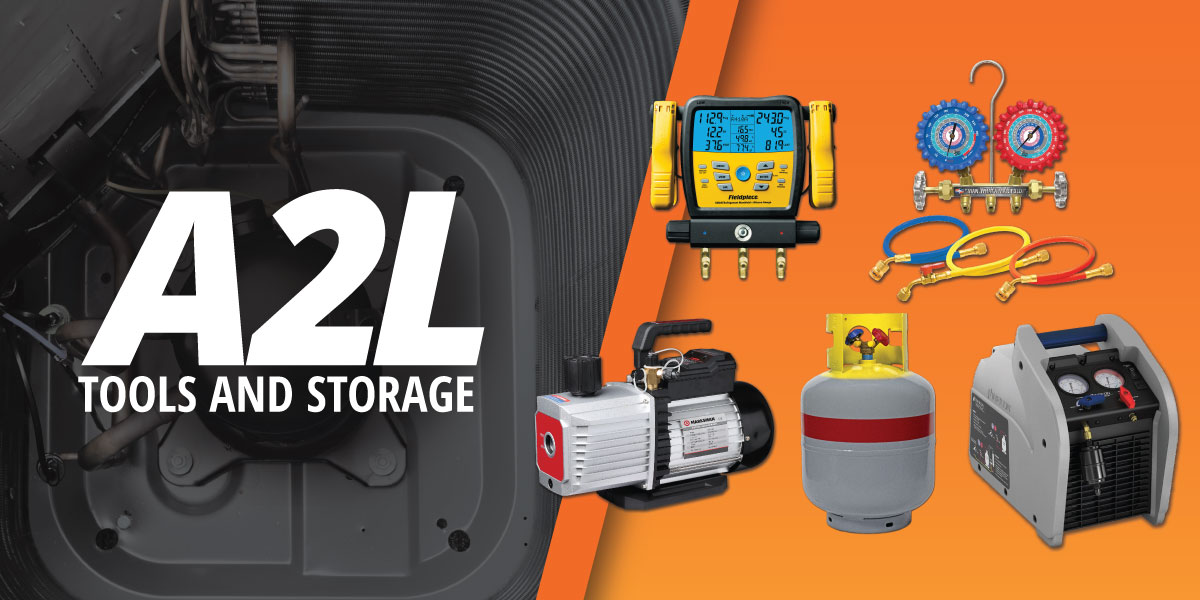
Digital thermometer
Pressure gauge
Manufacturer’s subcooling specs
How to Measure Subcooling (Step-by-Step)
- Measure the liquid line temperature near the condenser.
- Take a pressure reading from the liquid line.
- Find the saturation temperature from your P-T chart or spec sheet.
- Subtract the two — saturation temp minus actual line temp = subcooling value.
Tools you need
Suction pressure gauge
Digital thermometer
Pressure temperature (PT) chart or app
How to Measure Superheat (Step-by-Step)
- Measure the suction line temperature near the evaporator.
- Hook up your pressure gauge to the suction side and the thermometer to the refrigerant line.
- Record the suction pressure and use your P-T chart to find the corresponding saturation temperature.
- Take the actual line temp with your thermometer. Subtract the two — actual temp minus saturation temp = your superheat value (in °F).
What does “superheat vs subcool” tell me?
The number you get after subtracting the saturation temperature from the actual temperature reveals how much “extra heat” or “superheat” the refrigerant picked up after boiling off in the evaporator.
If your reading matches the manufacturer’s specs, the system is probably in good shape. If it doesn’t match, something’s not right with the charge or the condenser. Time to troubleshoot!
Troubleshooting With Superheat & Subcooling
Superheat and subcooling can provide a window into what’s happening behind the panels in an HVAC system, revealing where to look for a potential problem.
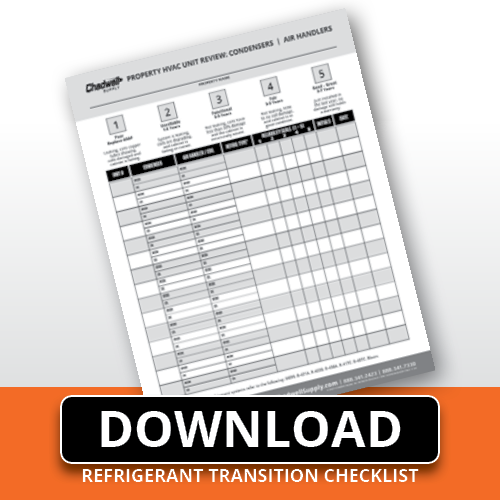
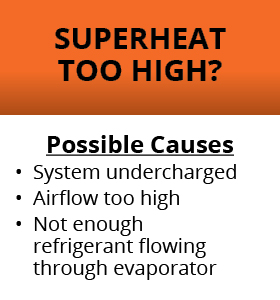
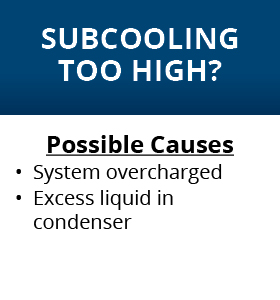
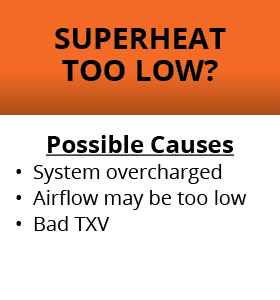
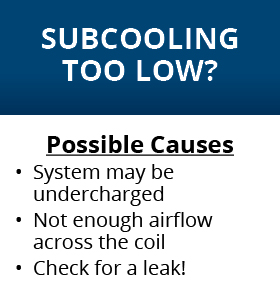
Pressure issues could indicate faulty equipment, or something simple, like a clogged filter. Here are a few other ideas to check:
- Faulty Metering Device: If the TXV is sticking or the cap tube is blocked, that can starve or flood the system.
- Liquid Line: Is there a restriction or kink in the line or a clog in the drier?
- Airflow: Are the filters dirty or the vents blocked? Is the blower weak? Is the coil dirty? These can all reduce airflow, prevent adequate heat transfer, and freeze the coil.
Connecting the Dots
Subcool and superheat should be measured together. Even if you’re checking subcooling on a newer system with a TXV, do not ignore superheat. Even if the charge is correct, compressors depend on proper refrigerant flow for cooling. Skipping the superheat step—even if the subcool numbers are right—can set a compressor up for failure.
Superheat should run between 8 and 14°F degrees Fahrenheit, though higher SEER equipment may run between 15 and 18°F. Be sure to check your unit’s manufacturer specifications. For example, if the manufacturer calls for 10°F subcooling (±3 to 4°F), we may hit that number but then find:
- Superheat is under 8°F → we may need to remove charge to prevent flooding.
- Superheat is over 15°F → we may need to add charge to ensure adequate mass flow.
Performing superheat and subcooling tests helps HVAC maintenance pros identify problems faster and more accurately. This means less time spent diagnosing issues on HVAC service requests, fewer call-backs, and happier residents.
Closing: Getting Superheat vs Subcool Right, Every Time
When you standardize superheat vs subcool checks—subcool first, superheat second—you’ll diagnose faster, charge accurately, and prevent compressor failures.
FAQs
How do I measure subcooling?
Measure liquid line temperature and pressure, convert pressure to saturation, then subtract actual line temp from saturation to get subcool (°F).
How do I measure superheat?
Measure suction line temperature and pressure, convert to saturation, then subtract saturation from actual line temp to get superheat (°F).